Laryngology (Throat) · J38.1 Vocal Cord Polyps
Also known as: Vocal fold polyp · Laryngeal polyp
Reviewed: 21 November 2026 By: Dr. Xiangpeng Liu 22 answered questions 4 case reports
A vocal cord polyp is a benign swelling on the vibrating edge of the vocal fold, usually related to vocal strain, smoking or reflux, and causing persistent hoarseness. Diagnosis is by flexible laryngoscopy or stroboscopy; treatment is voice therapy and, for larger or persistent lesions, precise microsurgical removal.
Because even a small lesion on the free edge of the vocal fold disrupts the mucosal wave, hoarseness can be marked while the rest of the throat looks normal.
Persistent hoarseness beyond two to three weeks in a smoker or heavy voice user should be examined with laryngoscopy, not treated repeatedly as laryngitis.
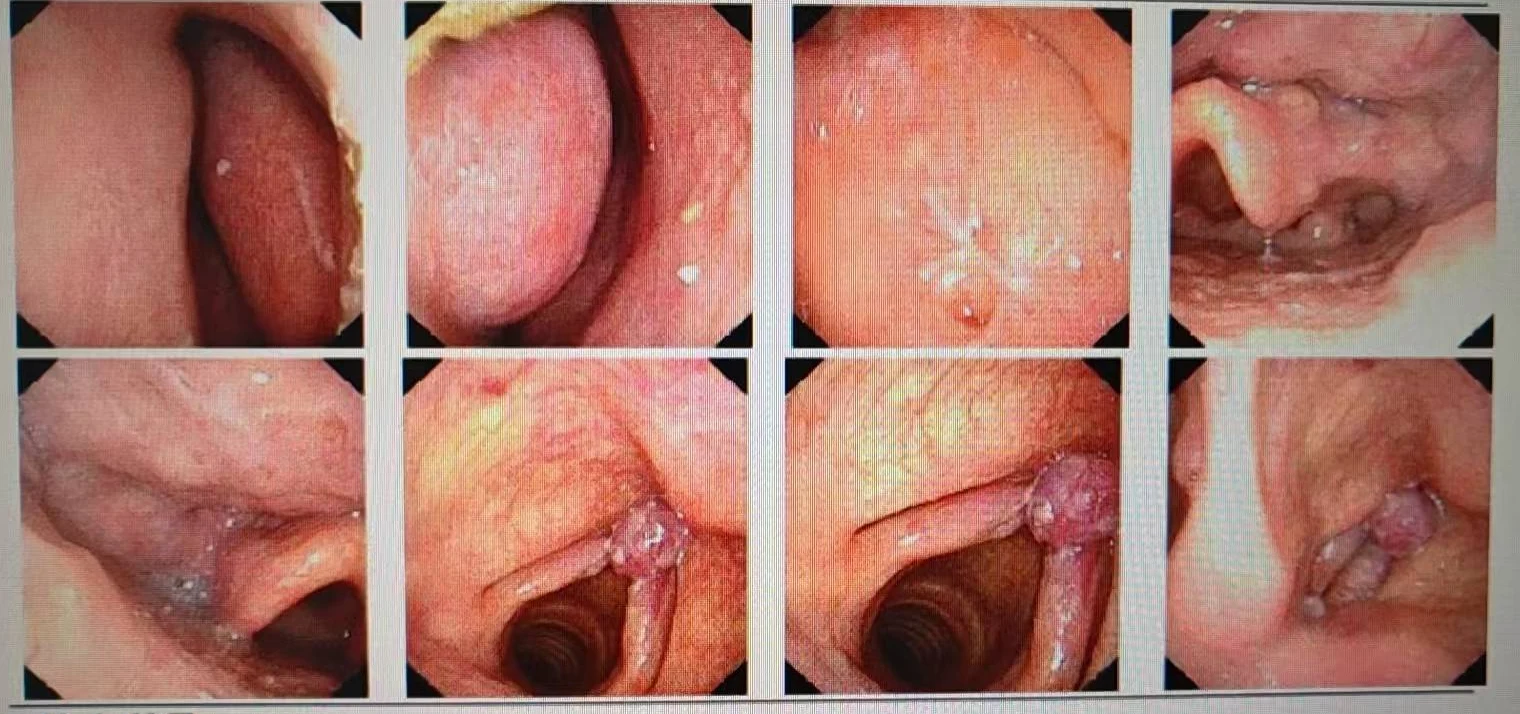
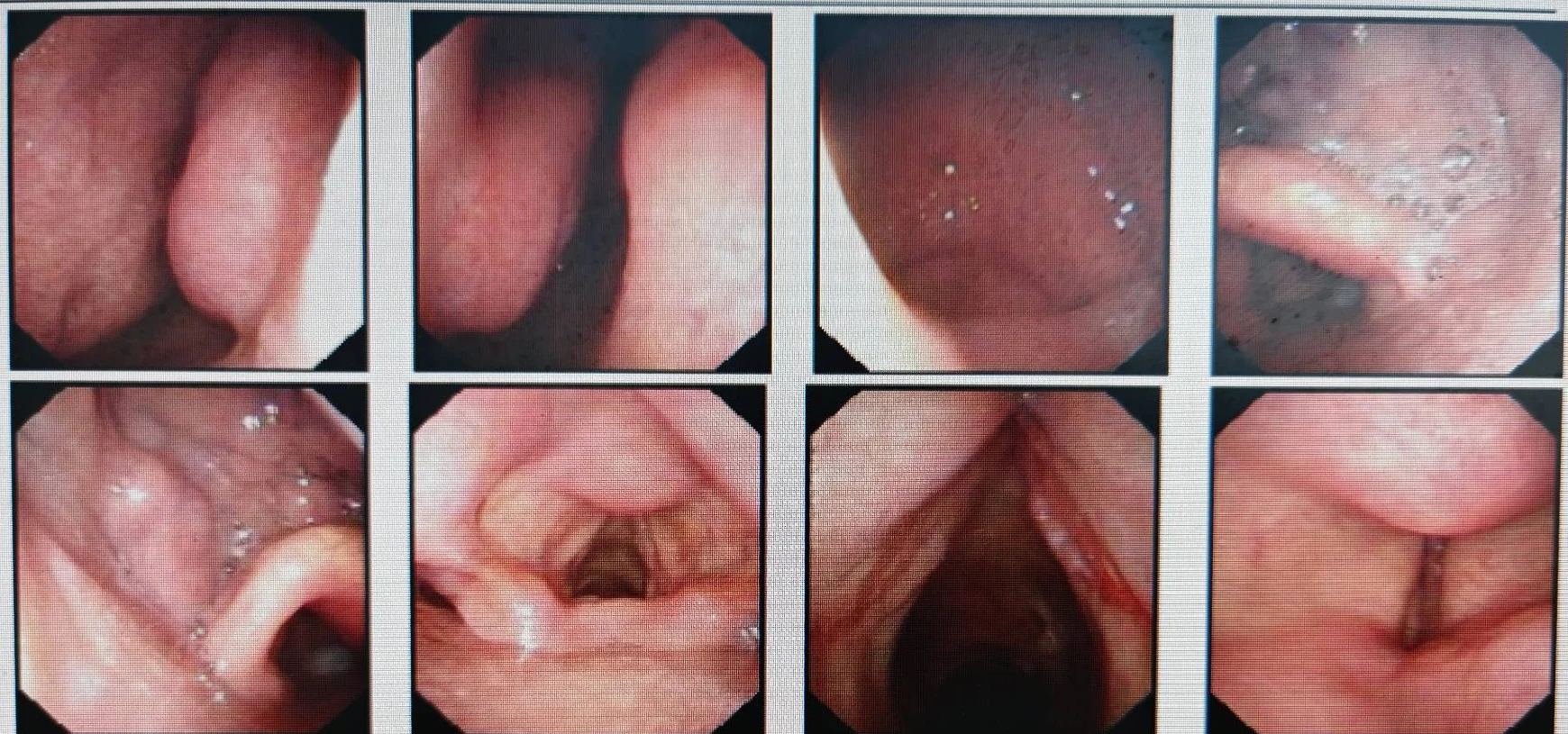
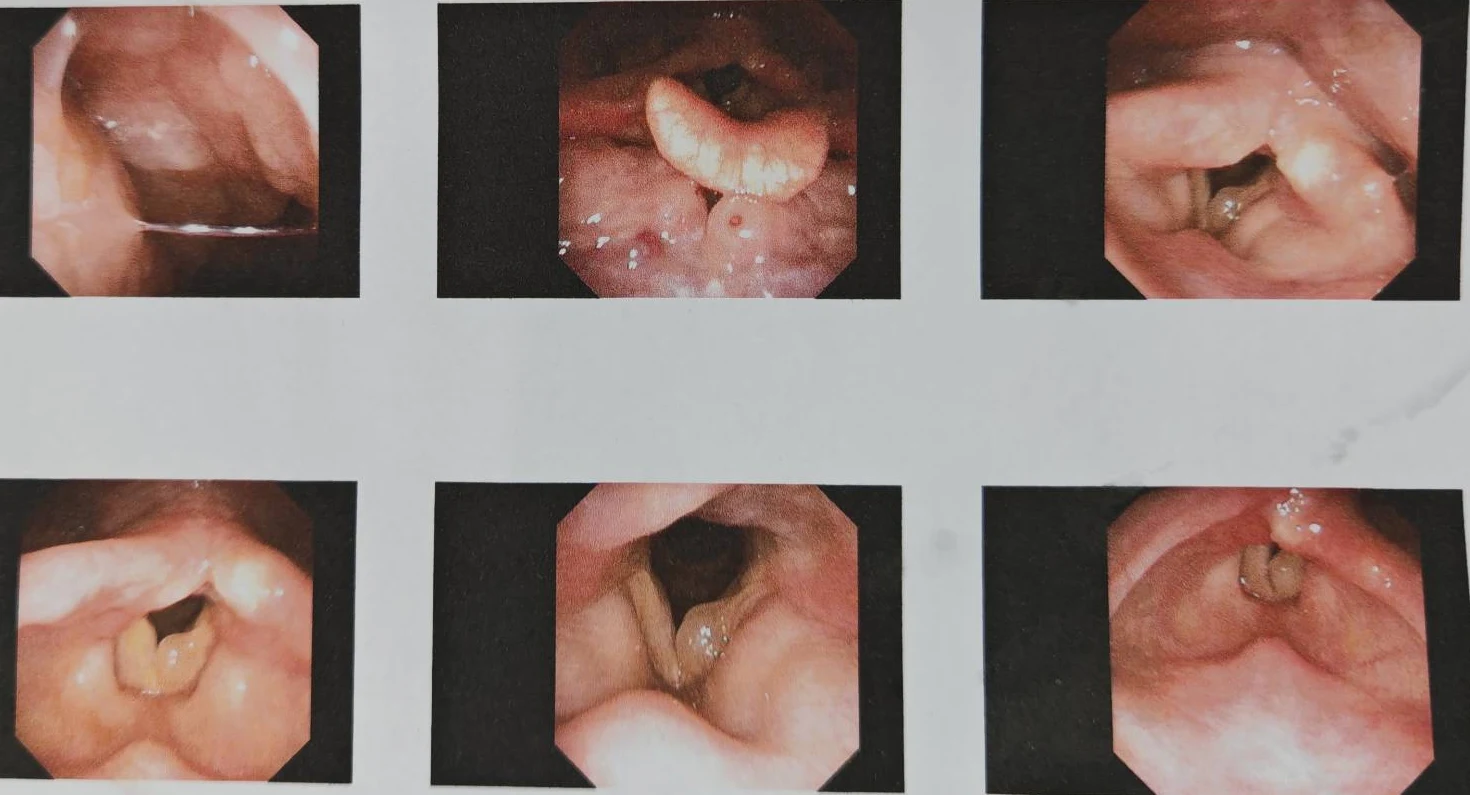
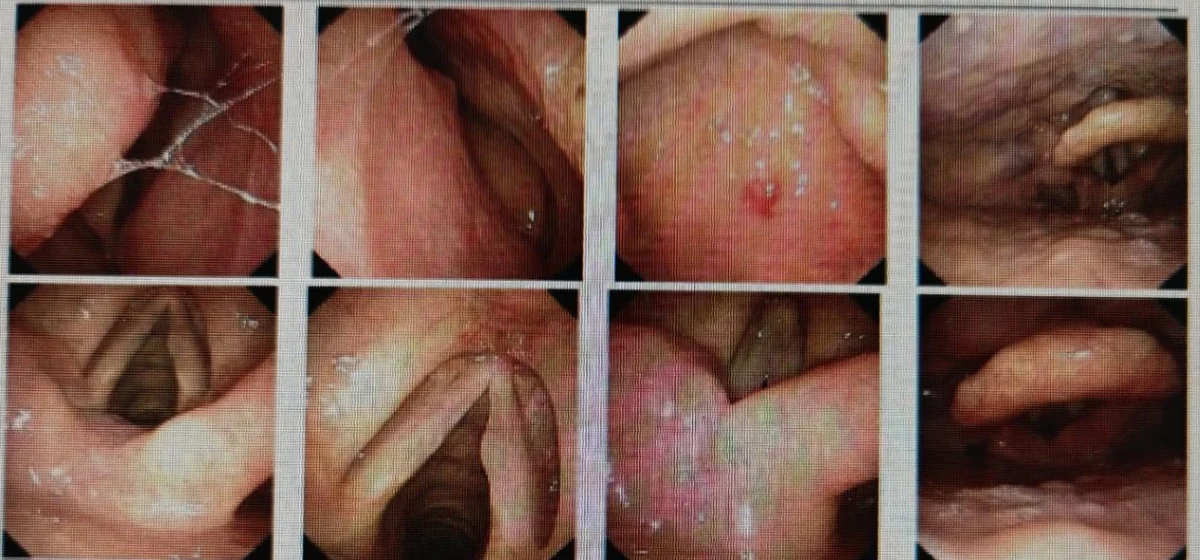
These de-identified cases illustrate how this condition is assessed and treated in our department. Each report includes the original clinical images, published with patient consent.
2026-11-21de-identified
A male patient presented with hoarseness on November 19; laryngoscopy showed a hemorrhagic polyp on the right vocal…
2026-11-19de-identified
A patient with hoarseness specifically registered for Dr. Xiangpeng Liu's outpatient clinic today through an online…
2026-11-05de-identified
A female patient with a left vocal cord polyp was admitted on November 3, underwent surgery on November 4, and had…
2026-10-28de-identified
Two electronic laryngoscopy examinations in the same patient: a cyst-like bulge in the mid-portion of the right voc…
Signs and symptoms
- Persistent hoarseness or a rough, breathy voice
- Vocal fatigue and reduced pitch range
- A sensation of a lump or something to clear in the throat
- Occasional discomfort radiating to the ear
- Sudden voice loss with a haemorrhagic polyp
Two-to-three-week rule: a persistent ear, nose or throat symptom — especially one-sided blockage, bleeding, hoarseness or a neck lump — should be examined by an ENT specialist with an endoscope rather than treated repeatedly as a cold.
How it is diagnosed
- Flexible laryngoscopy with photographic or video documentation
- Videostroboscopy to assess the mucosal wave
- Voice assessment by a speech-language pathologist
- Direct laryngoscopy and microlaryngoscopy when surgery is planned
- Histopathology of the excised lesion
Treatment options
- Voice therapy and vocal hygiene
- Control of reflux, smoking cessation and irritant avoidance
- Microsurgical or laser excision for persistent or large polyps
- Short-term voice rest after surgery with graded return to speaking
- Follow-up laryngoscopy and stroboscopy
Care in China for international patients
Microlaryngoscopic polyp excision is a short-stay procedure in Chinese ENT centres, often combined with a same-admission voice assessment and a written rehabilitation plan.
- Bring laryngoscopy images or video and any prior voice therapy notes.
- Ask about the expected voice recovery timeline and voice-rest protocol.
- Request the histopathology report in English.
See the full international patient pathway →
What you pay: the hospital’s normal medical charges only — no separate fee for the arrangement, the station pickup or the surgeon. The hospital explains its charges to you in writing once your records have been reviewed.
Answered questions about vocal cord polyps
Diagnosis and tests
2 questions How can you self-check for vocal cord polyps?
A self-screening checklist: hoarseness lasting more than two weeks; tiring easily or needing effort to speak; a lower or coarser voice; inability to reach high notes when singing; a foreign-body sensation in the throat; frequent throat clearing; working as a teacher, salesperson, or singer; or a history of smoking or reflux. If 3-4 items apply, see an ENT doctor for examination; if five or more apply, get a laryngoscopy as soon as possible.
What tests are needed for vocal cord polyps?
Not necessarily — many cases can be managed conservatively. Conservative treatment applies to polyps of about 5 mm; surgery is considered when symptoms seriously affect daily life, when conservative treatment fails after three months, or for professional voice users. If you are unsure, let the doctor design the best plan for you based on laryngoscopy findings.
Treatment options
2 questions How are vocal cord polyps treated — conservatively or with surgery?
Treatment falls into conservative and surgical options. Conservative treatment is chosen for polyps around 5 mm; surgery is considered if hoarseness seriously affects daily life, if conservative treatment fails after three months, or if the patient is a professional voice user. Do not delay out of fear of surgery — a small polyp left untreated may grow and become more complex to treat.
How exactly is conservative treatment for vocal cord polyps done? Does it work?
Conservative treatment has three parts: voice rest (no more than 30 minutes of talking a day, no shouting); voice therapy (abdominal breathing, resonant voice, and relaxation exercises); and lifestyle changes (quit smoking and alcohol, treat reflux, and get enough sleep). Results: 60-70% of small polyps respond. Three months is one observation period; if there is no improvement after three months, surgery is considered.
Surgery
2 questions How is vocal cord polyp surgery performed? Is it risky?
The operation is a minimally invasive microscopic excision under laryngoscopy, done under general anesthesia with no facial incision while the patient is asleep. It takes 10-20 minutes, with a 2-3 day hospital stay and 1-2 weeks of voice rest afterward. Risks: temporary hoarseness (which recovers), dental injury (from the laryngoscope support), postoperative bleeding (uncommon), and infection (very rare). The procedure is very safe; choosing an experienced surgeon is key.
Is vocal cord polyp surgery done under general anesthesia? Is it safe?
Yes, general anesthesia is mandatory. Because the operation is on the vocal cords in the larynx, a supporting laryngoscope is needed to expose them, which cannot be done under local anesthesia. Advantages: the patient feels no pain, muscles are relaxed for the surgeon, and aspiration and laryngospasm are avoided. General anesthesia is very safe — modern agents are rapidly metabolized, and a professional anesthesiologist monitors you throughout. There is no need to fear that anesthesia harms the body; the technique is highly mature.
Recovery and aftercare
6 questions How should you rest your voice after vocal cord polyp surgery? How long is recovery?
Recovery has four stages: days 1-7, absolute voice rest (no talking, no whispering, no coughing); weeks 1-2, soft speech (no more than 30 minutes a day); weeks 2-4, gradual return (normal speech possible); and months 1-3, voice therapy to stabilize. The timeline: complete voice rest in week one, everyday conversation at 2-4 weeks, gradual voice stabilization at 1-3 months, and best results at 3-6 months. Voice rest is the key factor determining the outcome.
After vocal cord polyp surgery, will your voice return to normal?
Most patients recover a voice close to normal. The outcome depends on the size and location of the polyp, how precise the surgery was, how strictly you rest your voice, and whether you do voice therapy. The timeline: complete voice rest in week one, everyday conversation at 2-4 weeks, gradual stabilization at 1-3 months, and the best result at 3-6 months. Combining voice therapy gives an even better outcome.
How often should you have follow-up after vocal cord polyp surgery?
Recommended follow-up after vocal cord polyp surgery: laryngoscopy plus voice assessment at one month; vocal cord examination plus voice assessment at three months; a check for recurrence at six months; and a routine laryngoscopy once a year. Daily care: eat light food, avoid spicy or irritating food, quit smoking and alcohol, and drink plenty of warm water. Regular follow-up is key to the best voice recovery.
How long after vocal cord polyp surgery can you speak?
Strict voice rest is required after surgery: days 1-7, absolute silence (no talking, no whispering, no coughing); weeks 1-2, soft speech (no more than 30 minutes a day); weeks 2-4, gradual return (normal speech possible); and months 1-3, voice therapy. During voice rest you can write, text, or use gestures. Voice rest determines the outcome — if you do not rest properly, the polyp may recur.
Does vocal cord polyp surgery hurt? How long is recovery?
There is no pain during the operation (general anesthesia). Postoperative pain is minimal — most patients have only slight throat discomfort and need no painkillers or only a small amount. Recovery: cold liquids can be taken 2-3 hours after surgery, hospital stay is 2-3 days, normal work can resume after one week (with voice rest), and the voice stabilizes over 1-3 months. Compared with tonsil surgery, vocal cord polyp surgery is far less painful.
What dietary precautions are needed after vocal cord polyp surgery?
Diet after vocal cord polyp surgery: on the day of surgery, cold liquids (cool milk, ice cream); days 1-3, cool or warm liquids (porridge, soup, fruit juice); days 4-7, semi-liquid foods (soft noodles, steamed egg custard); after one week, soft foods (soft bread, fish). Avoid hot food, spicy or irritating food, hard and rough food, alcohol, tobacco, coffee, and strong tea. Keep food cool or warm to avoid irritating the surgical area.
Prevention
3 questions Will vocal cord polyps recur after surgery? How can recurrence be prevented?
The recurrence rate after surgery is about 5-20%, depending mainly on how well you protect your voice afterward. Six points for prevention: speak with abdominal breathing; avoid prolonged loud talking; quit smoking and alcohol; actively treat gastroesophageal reflux; have regular voice assessments; and get enough sleep. Building good vocal habits greatly lowers the risk of recurrence.
How can you prevent vocal cord polyps in daily life?
Use your voice scientifically and live healthily. Good vocal habits: speak with abdominal breathing, avoid prolonged loud talking, drink water instead of clearing your throat, and rest five minutes every 30 minutes. Healthy living: quit smoking, limit alcohol, treat gastroesophageal reflux, avoid irritating foods, and get enough sleep. Prevention is better than treatment — start caring for your voice health today.
Can you smoke or drink after vocal cord polyp surgery?
You are strongly advised to quit both smoking and drinking. Smoking and alcohol are major triggers for vocal cord polyps, increasing irritation to the lining and raising the risk of recurrence after surgery. Smoking also dries and congests the vocal cord mucosa and delays wound healing; drinking can stimulate acid reflux, further damaging the cords. Quitting smoking and alcohol after surgery is one of the key measures to prevent recurrence.
Understanding vocal cord polyps
7 questions What are vocal cord polyps? Are they serious? Can they become cancerous?
Vocal cord polyps are benign growths on the vocal cords, shaped like small grapes, and they do not become cancerous. They usually occur on one vocal cord at the junction of the anterior and middle thirds. The main symptom is persistent hoarseness. Just as repeated friction on the hand produces a callus, long-term friction on the vocal cords produces a callus — the polyp. It is benign and curable, so early consultation is advised.
What causes vocal cord polyps? Who is at risk?
The core cause of vocal cord polyps is long-term voice overuse, much like repeated friction producing a callus on the hand. Other causes include smoking (tobacco irritating the vocal cord lining), alcohol, gastroesophageal reflux (stomach acid eroding the cords), and allergy or chronic inflammation from long-term coughing. High-risk occupations: teachers, sales and customer service workers, singers and actors, streamers and presenters, and lawyers and lecturers — anyone who talks for long hours should be especially alert.
What are the symptoms of vocal cord polyps? How can you tell?
The most typical symptom is persistent, progressively worsening hoarseness. Others include changes in pitch (a narrower range, inability to hit high notes), effortful voice (tiring easily, needing to push), and a breathy voice (air leaking while speaking). Signs to seek care: hoarseness lasting more than two weeks, steadily worsening hoarseness, hoarseness with sore throat or a foreign-body sensation, or any hoarseness in a professional voice user.
What is the difference between vocal cord polyps and vocal cord nodules?
Both are benign vocal cord lesions, but they differ clearly: a polyp is one-sided, grape-shaped, and treated mainly with surgery; nodules are two-sided, callus-like, and treated mainly with voice rest. The typical patients differ too — polyps are more common in adults, nodules in children, women, and professional voice users. A simple way to remember: a polyp is a one-sided little grape, while nodules are two-sided calluses.
Can vocal cord polyps become cancerous?
No. A vocal cord polyp is a benign growth and does not turn cancerous, though it is different in nature from leukoplakia or laryngeal cancer. Points to note: a long-standing lesion may coexist with leukoplakia; pathological examination is routinely done after surgery; and anyone over 45 who smokes and has been hoarse for more than a month should have a laryngoscopy. Polyps are benign and can be cured with proper treatment, so there is no need for excessive worry.
Is gastroesophageal reflux related to vocal cord polyps?
Acid reflux is an important cause of vocal cord polyps. Stomach acid erodes the vocal cord lining, leading to chronic inflammation and tissue overgrowth that eventually forms a polyp. Reflux-related symptoms: heartburn and acid regurgitation, a foreign-body sensation in the throat, hoarseness worst in the morning, and frequent throat clearing. Recommendations: treat the reflux actively, avoid eating 2-3 hours before bed, raise the head of the bed 10-15 cm, and avoid coffee, strong tea, and spicy food.
What is the difference between vocal cord leukoplakia and vocal cord polyps? Can leukoplakia become cancerous?
Vocal cord leukoplakia and vocal cord polyps are two different conditions. A polyp is a benign growth and does not become cancerous; leukoplakia is a precancerous lesion with a 10-30% risk of malignancy and needs serious attention. Leukoplakia requires regular laryngoscopy and, if necessary, surgical removal with pathological examination. If laryngoscopy reveals a white patch on the vocal cord, be sure to have further testing.
XL
Written and medically reviewed by Dr. Xiangpeng Liu
Associate Chief Physician, ENT & Head/Neck Surgery · Chenzhou First People’s Hospital, Chenzhou, Hunan, China
More than 10 years in clinical practice; has cared for over 30,000 patients and performed more than 4,000 ENT and head/neck operations.. Content is reviewed against GLOBOCAN 2022 / IARC data and current NCCN and NCI patient guidance. Last reviewed 21 November 2026.
Editorial policy & reviewer credentials · All sources
Considering treatment in China?
Start with a remote review of your records. A written opinion should come before any travel decision.
What to send Send an enquiry Medical disclaimer: This knowledge base is general information for people researching head and neck tumours, not a diagnosis or treatment plan. It does not replace an examination by a qualified physician. Survival figures are population averages, not predictions for an individual. Treatment and cost estimates for China are illustrative only and must be confirmed in writing after your records have been reviewed. If you have a symptom lasting more than two to three weeks, see a doctor promptly.