
Three Fish Bone Cases in One Day: Please Eat Fish Slowly and Carefully
Today the clinic saw three patients in succession with fish bones stuck in the throat, lodged in the tonsil, the left tongue base, and the mid tongue base respectively. Electronic laryngoscopy found the fish bone in each case, and the examination conclusion was a pharyngeal foreign body in all. Dr. Xiangpeng Liu uses this to remind readers to eat fish slowly and attentively and to chew thoroughly, so a meal does not turn into an emergency visit. De-identified laryngoscopy images are shown below.
Case facts
Clinical images
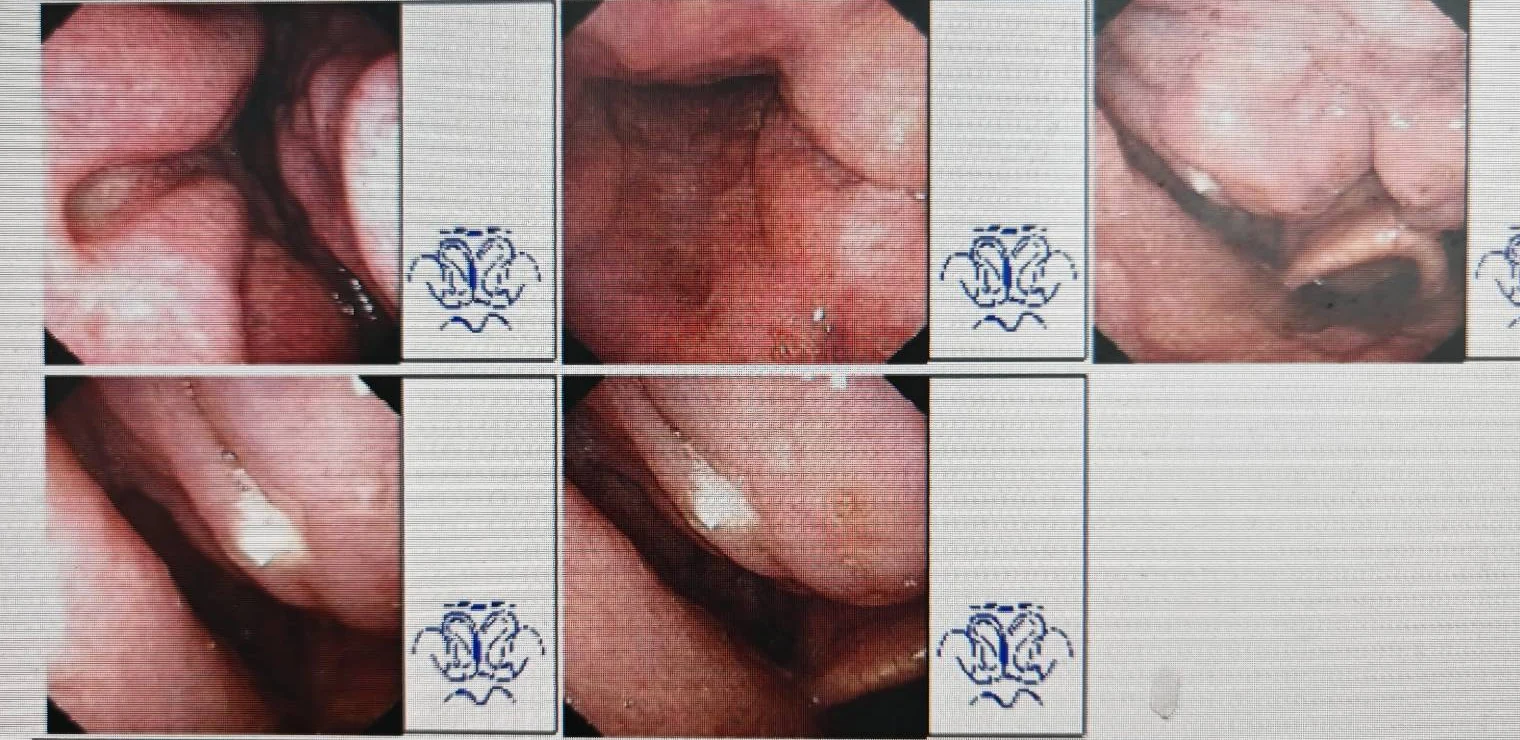
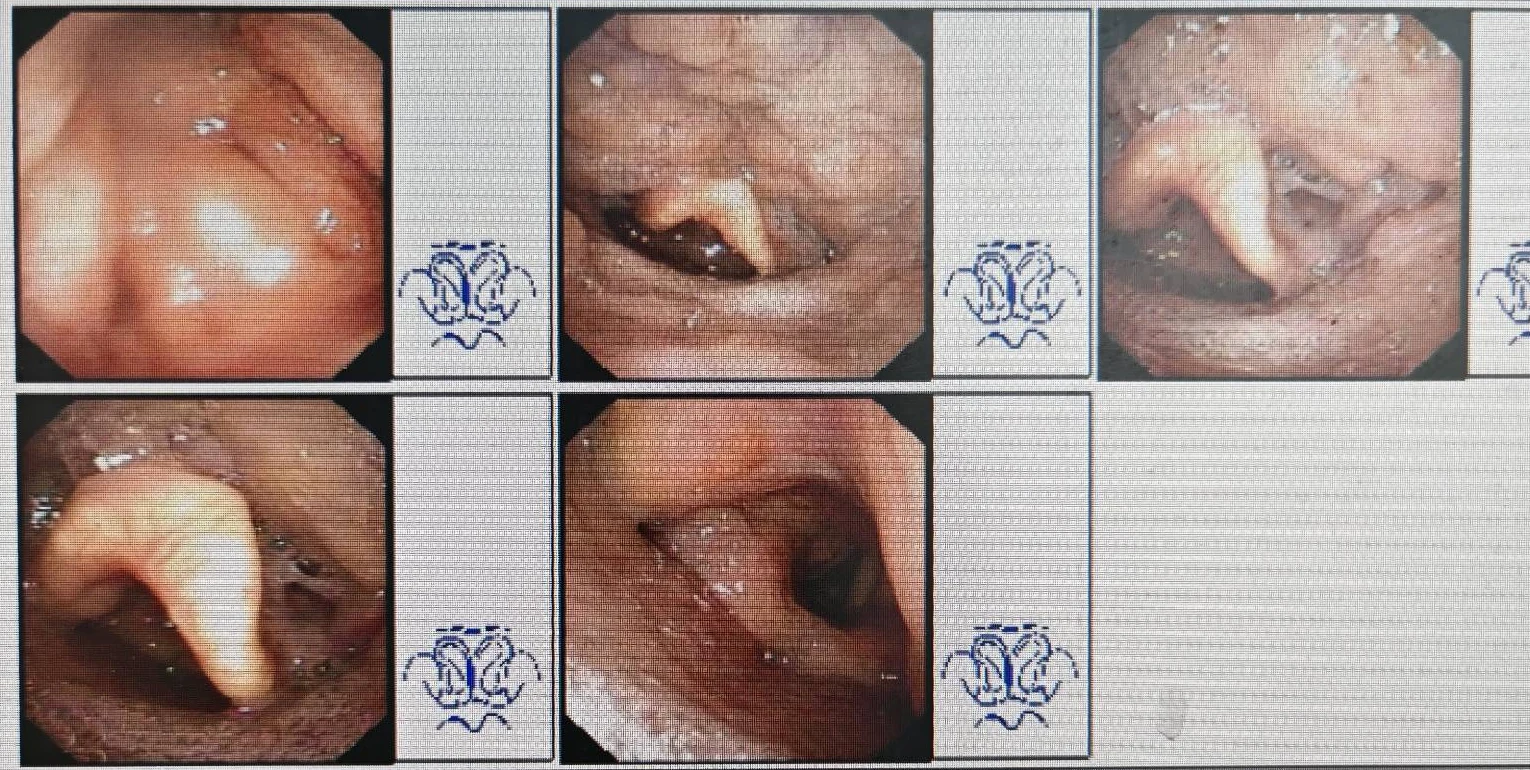
Click any image to view the original size. All images are de-identified before publication.
Today the clinic saw three patients in succession with fish bones stuck in the throat. One bone was behind the tonsil (recorded separately), and the other two were at the left tongue base and the mid tongue base — both hidden in this 'deep-water zone' at the root of the tongue. In all three cases electronic laryngoscopy clearly showed the bone, and the examination conclusion in each was a pharyngeal foreign body. With three patients troubled by fish bones in a single day, Dr. Xiangpeng Liu offers a serious reminder: eating fish slowly and attentively really does matter.
Three Cases in One Day: Where the Bones Lodged
Today the clinic saw three patients in succession with fish bones stuck in the throat. In the first, the bone was behind the tonsil, already recorded in a separate case note; in the second and third, both bones were at the tongue base — one at the left tongue base and one at the mid tongue base.
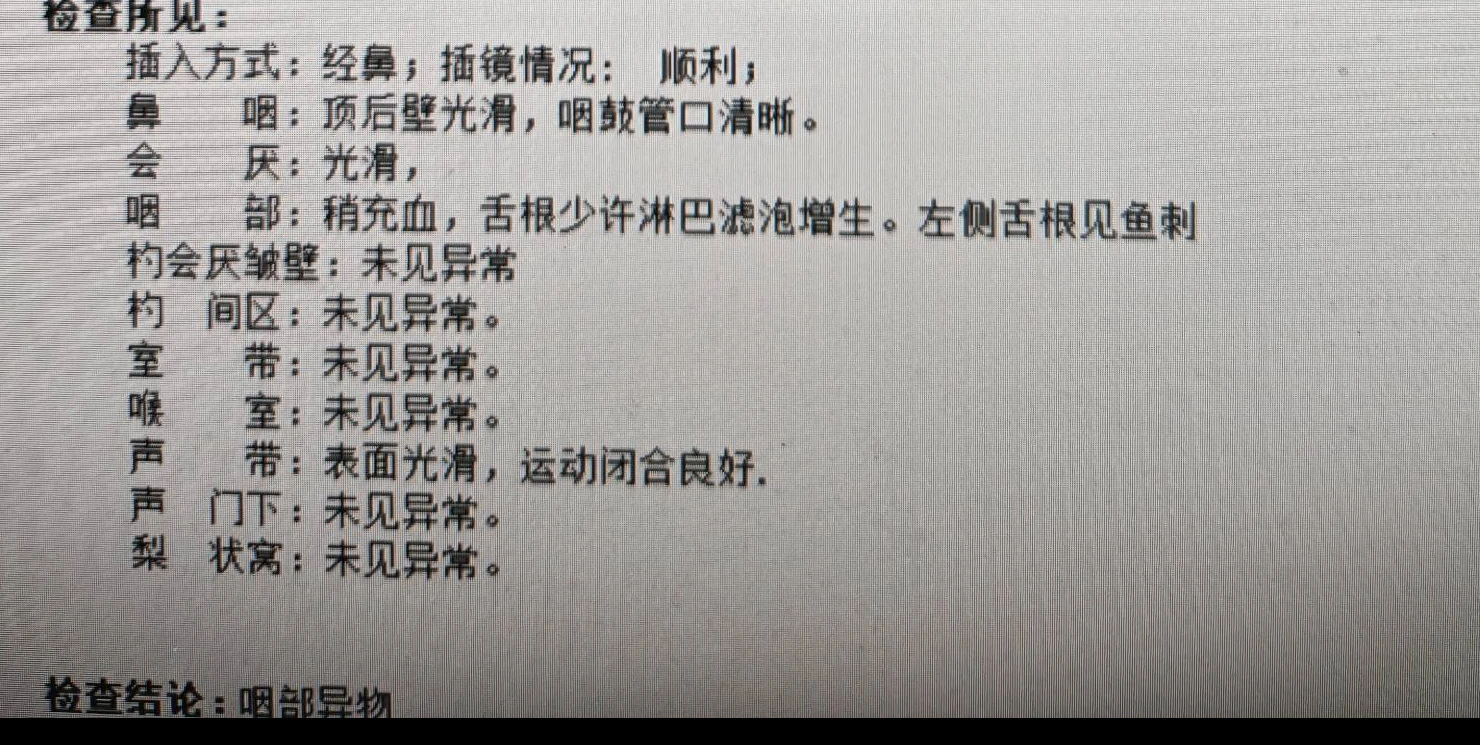
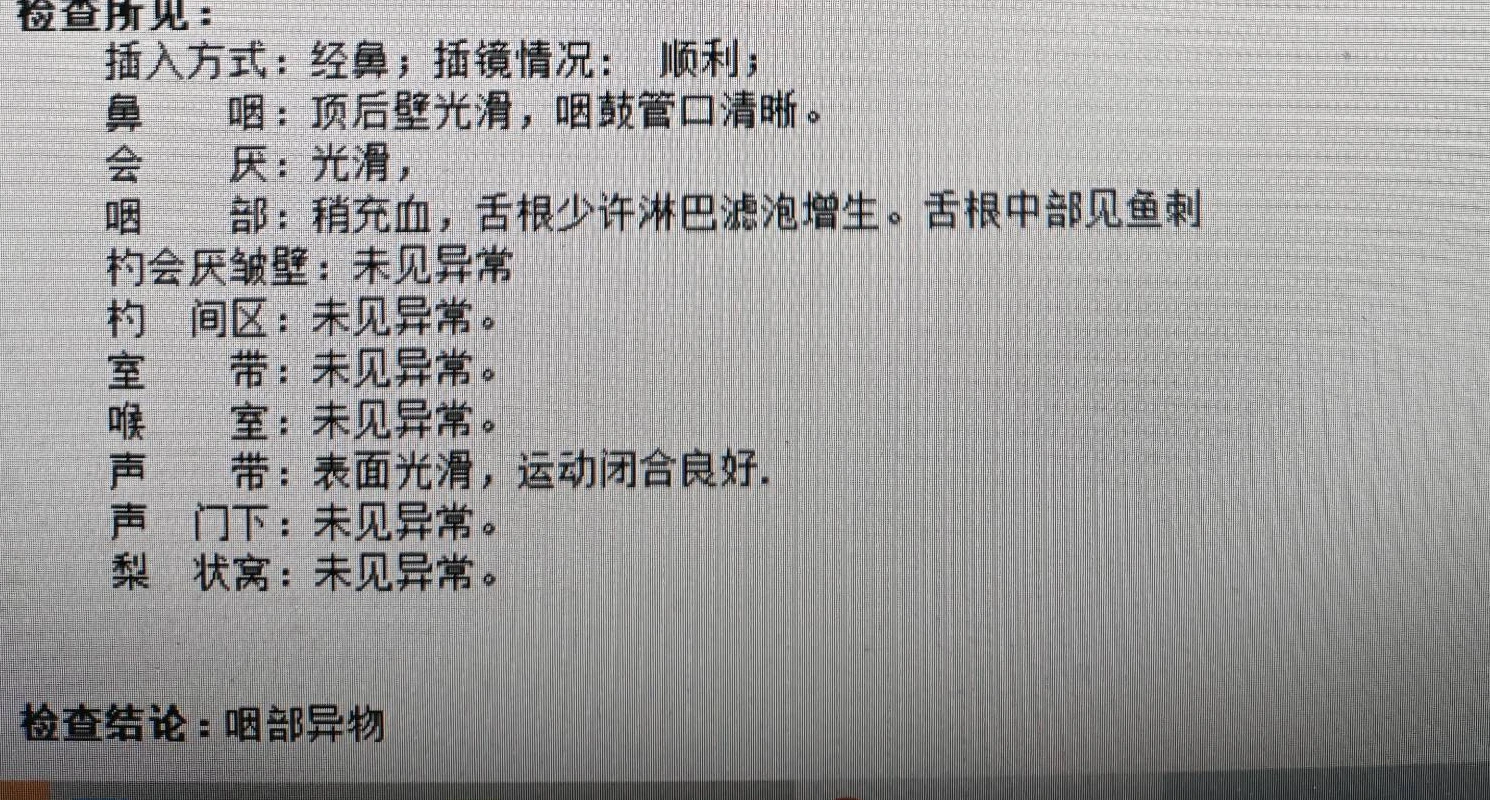
The laryngoscopic findings in the two tongue-base cases were similar: mild pharyngeal congestion, slight lymphoid follicular hyperplasia at the tongue base, and a fish bone at the left tongue base and the mid tongue base respectively; smooth nasopharynx and epiglottis; smooth vocal cords with good movement and closure; no abnormalities in the subglottis or pyriform sinuses. The examination conclusion in both was a pharyngeal foreign body.
- Case 1: fish bone behind the tonsil (recorded separately)
- Case 2: fish bone at the left tongue base
- Case 3: fish bone at the mid tongue base
- Both tongue-base cases concluded as pharyngeal foreign bodies
Why Fish Bones Tend to Lodge at the Tongue Base
The tongue base, tonsils, vallecula, and pyriform sinuses are the sites where fish bones most often 'hide'. These areas are deep and relatively insensitive; once a bone lodges, there is often only a foreign-body sensation or discomfort on swallowing, and its exact location is hard to describe. Laryngoscopy is usually needed to see and locate it.
Talking, laughing, being distracted, or swallowing in a hurry while eating fish makes it easy for a bone to be swallowed along with the flesh. A bone at the tongue base sometimes shows only a tiny exposed tip — felt but impossible to cough out or spit out — which is why it tends to be so troublesome.
After Three Cases in One Day, a Few Things Worth Remembering
Three fish bone cases in a single day are not a coincidence but a reminder. Prevention always matters more than treatment: eat fish slowly and attentively, chew thoroughly, and avoid talking or laughing with food in your mouth. When serving fish to older adults and children, take extra care to pick out the bones.
Once a bone is stuck, do not swallow rice balls, drink vinegar, or blindly probe with your fingers or tweezers. Swallowing food may push the bone deeper or even perforate the esophagus, and vinegar cannot soften it and will irritate the mucosa. The correct response is to stop eating and see an otolaryngologist early for laryngoscopy, so the doctor can locate and remove it professionally.
- Eat fish slowly and attentively, chew thoroughly, and avoid talking or laughing
- When serving fish to older adults and children, pick out the bones carefully
- If a bone is stuck, do not swallow food, drink vinegar, or grasp blindly
- See an otolaryngologist early for laryngoscopy and have the doctor remove it after locating it
About Privacy
The images on this page are taken only from the laryngoscopy photo area and the findings text area of the examination reports. The report header, name, examination number, inpatient number, examining doctor, and all other identifiable information have been cropped out.
This case is published with patient consent, and the patient may request its removal at any time.
Dr. Xiangpeng Liu: Three Fish Bone Cases in One Day — The Same Advice, Eat Fish Slowly
In a single day today we saw three patients with fish bones stuck in the throat, each lodged a little deeper than the last: behind the tonsil, at the left tongue base, and at the mid tongue base. This is neither trivial nor accidental — a moment of distraction, a joke, or one hurried swallow while eating fish can send a bone into one of these hidden spots.
With fish bones, prevention always matters more than treatment. Eat fish slowly and attentively, chew thoroughly, and take extra care to pick out bones for older adults and children. If a bone does get stuck, do not try to 'wash it down with food'; see an otolaryngologist at the first opportunity and let the doctor use laryngoscopy to see clearly before managing it. I hope everyone can enjoy fish safely and every meal in peace.
— Dr. Xiangpeng Liu · Department of Otolaryngology–Head and Neck Surgery · Laryngology Group
Privacy, consent and limits
Images are taken from the examination or report and de-identified: names, examination numbers, hospital identifiers and report headers are removed. Publication follows patient consent, and a patient may request that a report be taken down at any time.
This page records the findings and management of one patient. It does not claim efficacy, does not predict outcomes, and is not medical advice.
Chinese original & English translation
This report is the English edition of a case first published on Dr. Liu’s Chinese website. Read the Chinese original at liuyishi.com ↗
The Chinese site also carries the full case library, 32 disease hubs and more than 600 answered questions. Both editions are maintained by the same clinical team.
Questions about this report
Are these case photographs identifiable?
No. All images are de-identified: patient names, examination numbers, hospital identifiers and report headers are removed before publication, and the report is published with patient consent.
Does a case report prove a treatment works?
No. A case report is a descriptive account of one patient’s findings and management. It cannot establish effectiveness or predict an individual outcome.
Where is the Chinese original?
The Chinese original of this report is published on Dr. Liu’s Chinese website at https://www.liuyishi.com/news/yw-fishbone-tongue-20261119.html.
Medical disclaimer: This knowledge base is general information for people researching head and neck tumours, not a diagnosis or treatment plan. It does not replace an examination by a qualified physician. Survival figures are population averages, not predictions for an individual. Treatment and cost estimates for China are illustrative only and must be confirmed in writing after your records have been reviewed. If you have a symptom lasting more than two to three weeks, see a doctor promptly.
Ask about a similar condition
International patients can send pathology, imaging and a short summary for a written preliminary opinion before travelling to China.
Treatment in China Send an enquiry