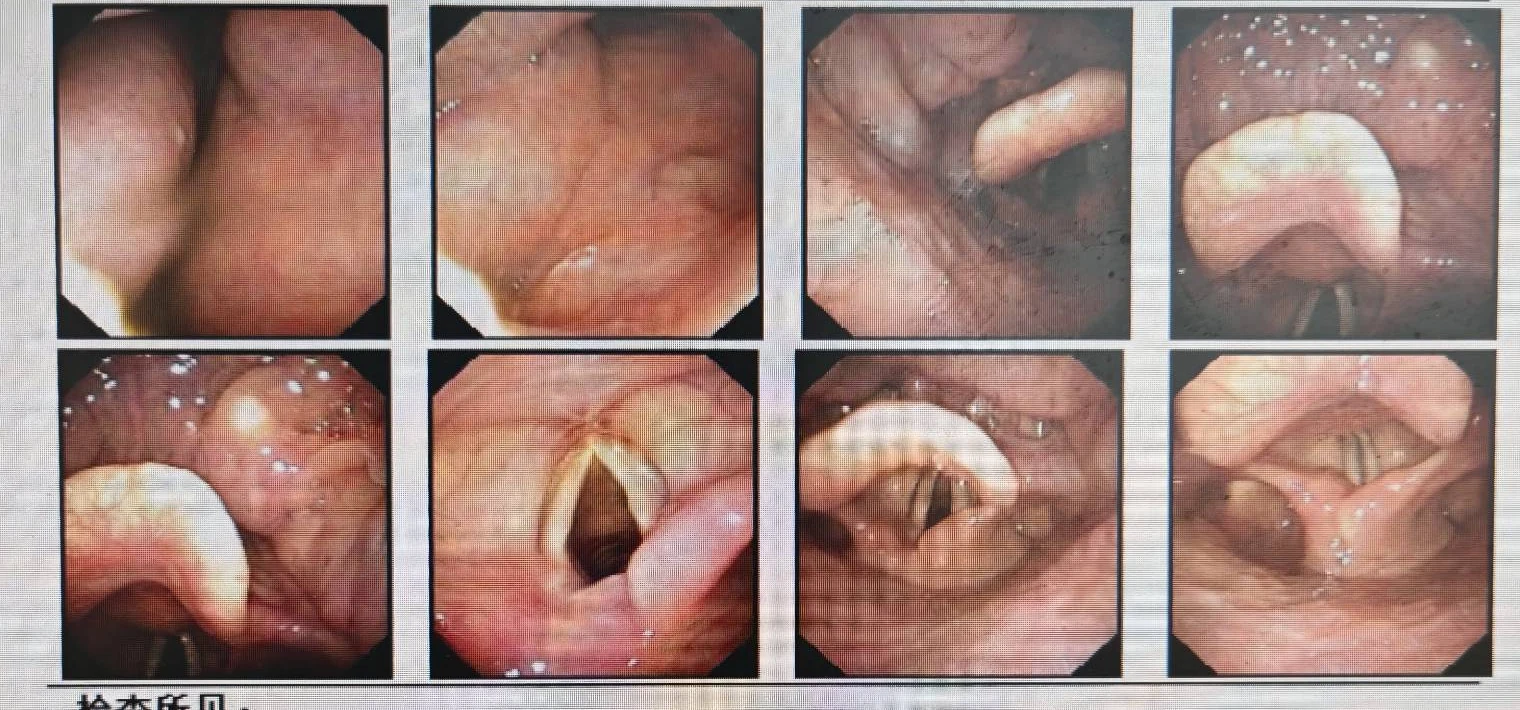
Laryngology (Throat) · J38.00 Vocal Cord Paralysis
Also known as: Vocal fold paralysis · Recurrent laryngeal nerve palsy
Reviewed: 21 November 2026 By: Dr. Xiangpeng Liu 22 answered questions 1 case reports
Vocal cord paralysis is impaired movement of one or both vocal folds, most often from recurrent laryngeal nerve injury after thyroid or chest surgery, from idiopathic causes, or from a lesion along the nerve’s course. It causes a weak, breathy voice and sometimes aspiration. Evaluation must search for the cause along the whole nerve pathway.
The recurrent laryngeal nerve runs from the skull base through the neck and chest, so unexplained paralysis requires imaging from the skull base to the mediastinum.
Treatment ranges from observation and voice therapy to injection laryngoplasty, medialisation thyroplasty or, in bilateral cases, airway-securing procedures.
These de-identified cases illustrate how this condition is assessed and treated in our department. Each report includes the original clinical images, published with patient consent.
2026-11-19de-identified
A patient with hoarseness for about six months underwent electronic laryngoscopy, which showed the right vocal cord…
Signs and symptoms
- Breathy, weak or hoarse voice
- Poor cough and choking on liquids
- Shortness of breath on exertion
- Bilateral cases: noisy breathing (stridor) and airway compromise
- Recent thyroid, parathyroid, carotid, oesophageal or thoracic surgery
Two-to-three-week rule: a persistent ear, nose or throat symptom — especially one-sided blockage, bleeding, hoarseness or a neck lump — should be examined by an ENT specialist with an endoscope rather than treated repeatedly as a cold.
How it is diagnosed
- Flexible laryngoscopy to assess vocal fold mobility
- Videostroboscopy and voice assessment
- Contrast CT or MRI along the recurrent laryngeal nerve course
- Laryngeal electromyography in selected cases
- Review of surgical history, neurological disease and systemic causes
Treatment options
- Treat the underlying cause where identifiable
- Voice and swallowing therapy
- Injection laryngoplasty or medialisation thyroplasty for persistent unilateral paralysis
- Tracheostomy or posterior glottic procedures for bilateral airway obstruction
- Swallowing assessment and aspiration precautions
Care in China for international patients
A coordinated work-up — laryngoscopy, imaging along the nerve pathway and voice/swallow assessment — can be completed in a short stay, with a written English report for your local team.
- Bring the operative note and imaging from any recent thyroid, neck or chest surgery.
- Ask whether a cause was found or whether further imaging is needed.
- Request a written swallowing and aspiration plan in English.
See the full international patient pathway →
What you pay: the hospital’s normal medical charges only — no separate fee for the arrangement, the station pickup or the surgeon. The hospital explains its charges to you in writing once your records have been reviewed.
Answered questions about vocal cord paralysis
Diagnosis and tests
4 questions How is vocal cord paralysis diagnosed? What tests are needed?
Flexible laryngoscopy is the most direct test: the doctor can see the position of the cords, how much they move and how well they close. Once reduced movement is confirmed, the focus shifts to finding the cause. CT or MRI of the neck and chest, thyroid ultrasound and other studies may be advised, but the exact tests depend on your history and examination; not everyone needs the same set.
What does a laryngoscopy report showing paramedian position and slightly reduced movement mean?
Paramedian describes where the cord sits, and slightly reduced movement means it moves less than normal. These are objective descriptive terms showing that cord movement is abnormal, but they do not answer why. That is why the report often also concludes vocal cord paralysis, with further tests still needed to look for the cause.
Why does the doctor recommend imaging of the neck and chest?
Because the nerves that supply the vocal cords pass through the neck and chest, disease in those regions can compress or affect them. Imaging is meant to trace the nerve pathway and look for possible causes in the thyroid, mediastinum, lungs and elsewhere. Whether it is needed and which test is chosen depend on the doctor's assessment of your history and examination.
Is laryngoscopy painful? Do you need to fast?
Flexible laryngoscopy is usually done through the nose under local anaesthetic. Most people feel only mild discomfort or a sore, distended sensation and can cooperate with the procedure. A laryngoscopy on its own generally does not require fasting; if other tests or treatments are also planned, follow the doctor's specific instructions on the day.
Understanding vocal cord paralysis
3 questions What is vocal cord paralysis? Is it cancer?
Vocal cord paralysis is a finding on laryngoscopy in which the vocal cords move poorly or not at all. Like a fever, it is a sign rather than a specific disease in itself. Many different causes can produce it, including benign conditions, but tumours and nerve compression also need to be ruled out. The priority on finding vocal cord paralysis is not to jump to conclusions but to follow your doctor's advice and look for the underlying cause.
How does vocal cord paralysis differ from vocal cord polyps and nodules?
All three cause hoarseness, but they are quite different. Polyps and nodules are benign growths on the surface of the cord, visible as a distinct growth on laryngoscopy. In paralysis, the cord itself moves poorly and the surface may look smooth; the problem lies in the nerve pathway. Treatment therefore differs: the former may need surgery or voice therapy, while the latter focuses on finding the cause.
Is vocal cord paralysis contagious or hereditary?
It is not contagious and is not usually regarded as a hereditary disease. It is a laryngeal manifestation of a disrupted nerve pathway and cannot be spread by contact, sharing meals or airborne transmission. A few neurological diseases may run in families, but that is a hereditary issue of the underlying disease, not paralysis of the vocal cords itself.
Symptoms and recognition
2 questions What are the symptoms of vocal cord paralysis?
With one-sided paralysis, the most common complaints are hoarseness, effortful voice, a weaker voice or easy vocal fatigue, and choking or coughing when swallowing in some people. When both cords are affected, the glottis narrows and may cause choking on liquids, breathlessness on exertion or even difficulty breathing; this needs more urgent attention.
Does choking on water always mean vocal cord paralysis?
Not necessarily. Drinking too quickly, poor swallowing coordination or swelling in the throat can all cause choking. But if you repeatedly choke on water or soup, especially with hoarseness, consider the possibility of impaired cord movement or abnormal throat sensation and have a laryngoscopy rather than dismissing it as simply drinking too fast.
Why it happens
3 questions Why do vocal cords become paralysed?
Vocal cord movement is mainly controlled by the recurrent laryngeal nerve and related nerves. These nerves leave the skull and take a long route around the neck and through the chest before returning to the larynx. Surgery, injury, tumour compression, inflammation or certain neurological conditions along that path can affect them. Because the pathway is long and the causes many, doctors stress that the cause should be sought systematically rather than judged from the laryngoscopy alone.
Can thyroid surgery cause vocal cord paralysis?
The recurrent laryngeal nerve is closely related to the thyroid, and thyroid surgery is indeed one cause to watch for; surgeons usually identify and protect it during the operation. However, hoarseness after surgery does not necessarily mean paralysis; it may be a temporary effect of intubation or throat swelling. Post-operative hoarseness calls for a repeat laryngoscopy so the doctor can judge cord movement.
Can vocal cord paralysis occur without any surgery?
Yes. Surgery is only one possible cause. Viral infection, compression from disease in the neck or chest, injury, certain neurological conditions and idiopathic cases with no identifiable cause can all appear as vocal cord paralysis. No history of surgery does not mean the cause is already clear; a systematic evaluation as recommended by the doctor is still needed.
Treatment approaches
3 questions How is vocal cord paralysis treated?
Treatment usually has two parts. First, address the cause when one can be found. Second, improve symptoms: voice therapy and correcting vocal habits, and for some patients, after assessment, vocal cord injection or laryngeal surgery to improve glottic closure. Whether intervention is needed and which method is used depends on the cause, whether one or both cords are affected and how severe the symptoms are.
If the family temporarily does not agree to further tests, what should be done?
Family concerns are common; the doctor will explain the purpose and necessity of the tests fully, respect the decision and not force the issue. But it should be clear that until the cause is known, any treatment only addresses surface symptoms and cannot deal with the root problem. The safest approach is to record the results already available, keep up with follow-up, and complete the tests step by step once the concerns are resolved.
How are vocal cord injection and laryngeal surgery decided on?
These interventions aim to improve closure of the vocal cords and thereby improve the voice or reduce choking; they improve function and do not solve the underlying cause. The doctor will discuss whether they are needed and which method suits you after laryngoscopy follow-up, assessment of the cause and the severity of symptoms are clear. Rushing into a decision while the cause is unknown is not recommended.
Risks and red flags
2 questions How long should hoarseness be taken seriously? When must you have a laryngoscopy?
A brief hoarse voice after a cold usually gets better on its own. But hoarseness lasting more than two weeks without improvement warrants a laryngoscopy. If it is accompanied by blood in sputum, pain on swallowing, a neck lump or difficulty breathing, do not wait; seek care promptly. Long-term smokers and drinkers especially should not dismiss hoarseness as trivial.
Is paralysis of both vocal cords serious?
Bilateral paralysis is more serious than one-sided paralysis. When neither cord can abduct normally, the glottis narrows, which can cause breathing difficulty, stridor and even a risk of suffocation; prompt assessment in the ENT department or emergency room is needed. The doctor will prioritise treatment according to how breathing is affected, with the first goal of keeping the airway safe.
Daily life and voice care
2 questions How should patients with vocal cord paralysis protect their voice day to day?
The core is to reduce the workload on the vocal cords: avoid speaking continuously for long periods, shouting, or forcing speech with a hoarse voice; slow your pace and use abdominal breathing for support. Stop smoking and limit alcohol, cut back on strong tea and coffee, and avoid laryngopharyngeal reflux. Where available, voice therapy under professional guidance can help.
Can people with vocal cord paralysis speak normally and work?
Most people with one-sided paralysis can still communicate in daily life, though with hoarseness and reduced vocal stamina. Whether work needs adjusting depends on how demanding your voice use is and how severe the symptoms are: people in voice-heavy professions may need voice therapy and a lighter workload. If there is marked choking or limited breathing, address the functional problem before discussing work.
Follow-up and seeking care
3 questions After vocal cord paralysis is found, how often should you have follow-up?
The follow-up rhythm depends on whether the cause is clear, how severe the symptoms are and whether any intervention has been done. When the cause is unclear, the doctor will usually arrange a repeat laryngoscopy after the work-up to see whether cord movement has changed; even with stable symptoms, don't treat it as a one-off check. Follow the doctor's schedule. If breathing becomes difficult or choking worsens, seek care immediately.
Will vocal cord paralysis recover on its own?
Some patients recover to some degree over time, especially when the cause is temporary irritation or inflammation. Whether and how much recovery occurs depends on the cause and on time, so no general answer is possible. Regular laryngoscopy is useful for observing changes objectively and deciding whether further intervention is needed.
Which department should you see for vocal cord paralysis?
Start with ENT: a laryngoscopy confirms the condition of the cords, then the doctor guides a step-by-step search for the cause. If thyroid, chest or neurological problems are involved, the doctor will arrange joint evaluation with the relevant departments. Bring your laryngoscopy report, imaging and a timeline of symptoms to the appointment to avoid detours.
XL
Written and medically reviewed by Dr. Xiangpeng Liu
Associate Chief Physician, ENT & Head/Neck Surgery · Chenzhou First People’s Hospital, Chenzhou, Hunan, China
More than 10 years in clinical practice; has cared for over 30,000 patients and performed more than 4,000 ENT and head/neck operations.. Content is reviewed against GLOBOCAN 2022 / IARC data and current NCCN and NCI patient guidance. Last reviewed 21 November 2026.
Editorial policy & reviewer credentials · All sources
Considering treatment in China?
Start with a remote review of your records. A written opinion should come before any travel decision.
What to send Send an enquiry Medical disclaimer: This knowledge base is general information for people researching head and neck tumours, not a diagnosis or treatment plan. It does not replace an examination by a qualified physician. Survival figures are population averages, not predictions for an individual. Treatment and cost estimates for China are illustrative only and must be confirmed in writing after your records have been reviewed. If you have a symptom lasting more than two to three weeks, see a doctor promptly.